MongoDB Experience
NoSQL schema design and geospatial queries for the MERN stack.
Overview
How I've used MongoDB
MongoDB is my default database choice for custom MERN applications — its document model fits naturally with how I structure data coming from a React frontend, and its geospatial features have been essential for location-based features.
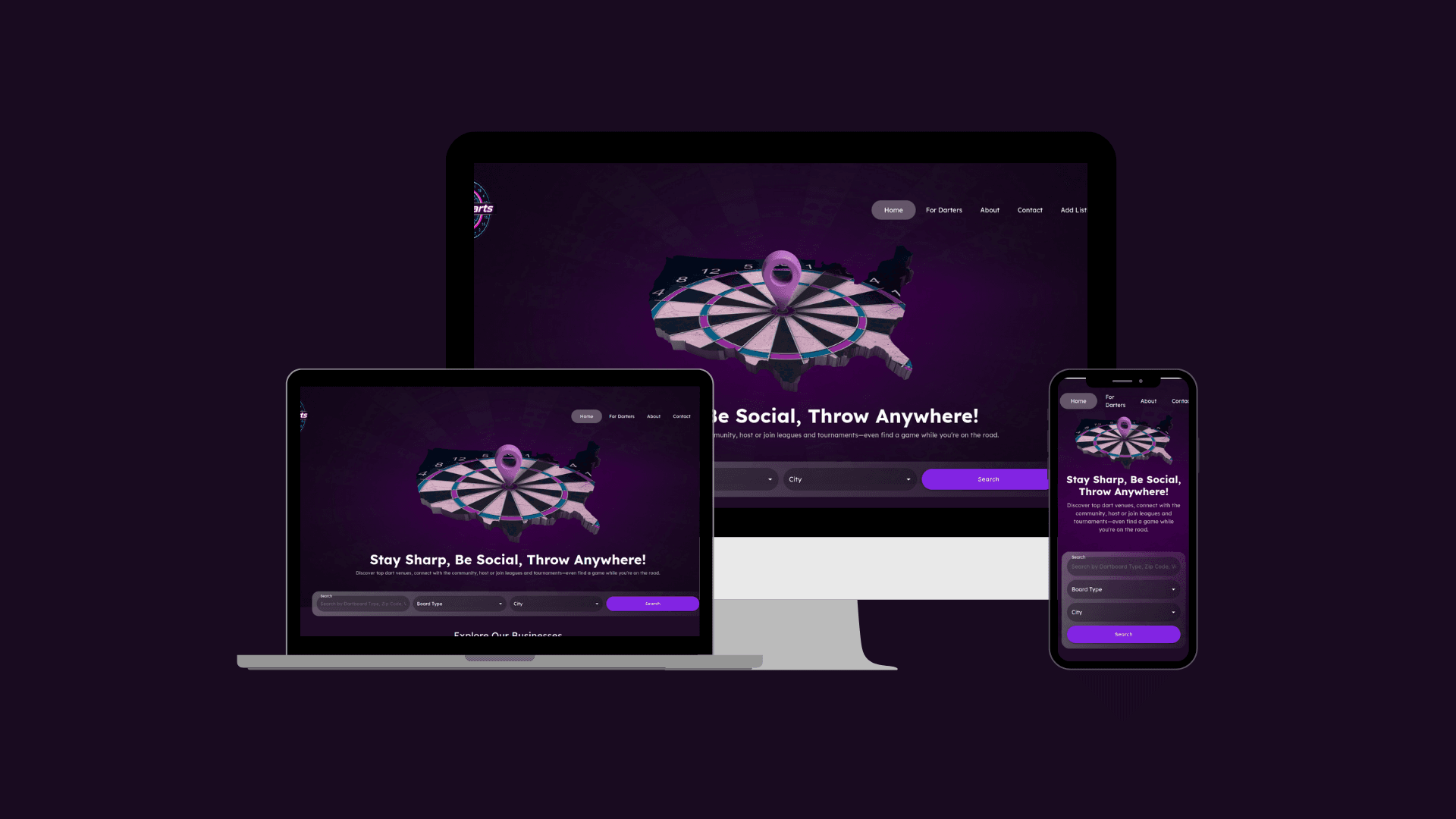
RoadDarts.com is the project that put MongoDB's geospatial indexing to real use — the platform needed to find and rank business listings by proximity to the user, across thousands of records, fast enough that filtering felt instant. That meant designing the schema around 2dsphere indexes from the start rather than trying to retrofit location search later, plus building aggregation pipelines that could combine proximity, category filters, and sorting in a single query rather than multiple round trips.
What I can do
Specific MongoDB capabilities
- ✓Schema design for document-based data models
- ✓Geospatial indexing and proximity queries (2dsphere)
- ✓Aggregation pipelines for multi-stage filtering and sorting
- ✓Indexing strategy for query performance at scale
- ✓Integration with Node.js/Express via Mongoose or native driver
FAQ
Common questions about my MongoDB work
Why MongoDB instead of a SQL database for these projects?+
For MERN stack apps with flexible, nested data structures (like business listings with variable fields) and location-based queries, MongoDB's document model and geospatial indexing are a more natural fit than relational tables and joins.